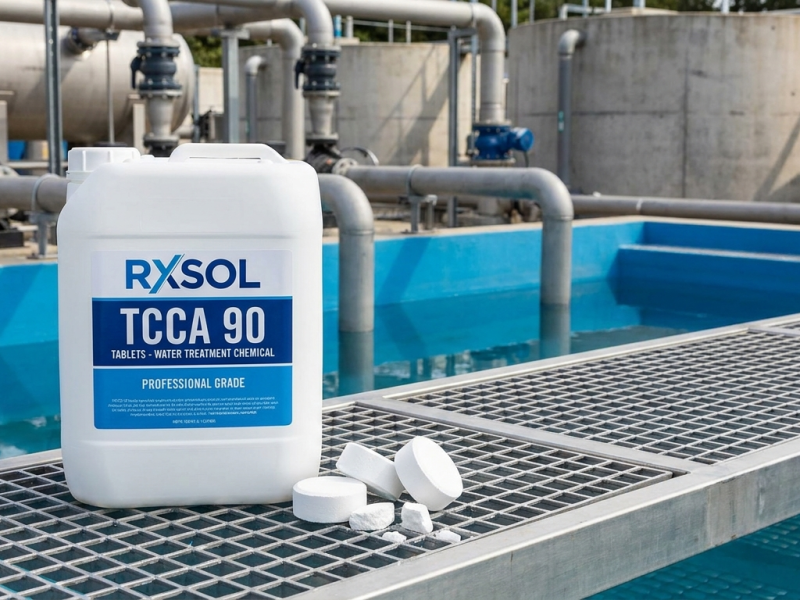
Swimming pools · hotels, villas, clubs
A swimming pool in Oman needs three things kept in range every day: free chlorine, pH and water balance. Oman Chemical supplies chlorine as calcium hypochlorite, sodium hypochlorite, TCCA tablets and SDIC granules, plus pH increaser and reducer, cyanuric acid stabiliser, algaecides, clarifiers and stain removers for hotel, villa, club and community pools.
- Trading since 1995
- Warehouse in Barka
- About 7,000 products
- MSDS on request

Pool water problems and the chemicals that solve them
Strong sun and warm water use up chlorine quickly in Oman and favour algae. Outdoor pools need stabilised chlorine or more frequent dosing, and evaporation raises dissolved solids and calcium over the season.
Disinfection
Bathers bring in bacteria, sweat and sunscreen that use up chlorine.
Chemical typesCalcium hypochlorite (raises calcium and pH), sodium hypochlorite liquid (raises pH), TCCA tablets (slow dissolving, lower pH, add stabiliser) and SDIC granules (fast dissolving, add stabiliser). Keep free chlorine within the limits your health authority sets.
pH control
Above pH 7.6 chlorine works poorly and scale forms; below 7.2 water irritates eyes and corrodes fittings.
Chemical typespH reducer (acid or sodium bisulphate) and pH increaser (sodium carbonate).
Sunlight
UV light destroys unstabilised chlorine within hours in an outdoor pool.
Chemical typesCyanuric acid stabiliser for outdoor pools. Too much stabiliser slows chlorine, so test it and dilute with fresh water when it builds up.
Algae and cloudy water
Green, black or mustard algae and fine particles that the filter cannot catch.
Chemical typesAlgaecides, clarifiers and flocculants, and phosphate removers to cut the nutrient algae feed on.
Stains and scale
Metals from source water or corroded fittings stain surfaces, and calcium forms scale.
Chemical typesMetal sequestrants and stain removers.
Pool chemicals buyers order most
Ordered by our own sales records: the products customers in Oman reorder most come first.
 Sodium Hypo ChloriteRXSOL-31-3025Bestseller
 Calcium Hypochlorite GranulesRXSOL-31-3028Bestseller
 Trichloroisocyanuric Acid TabletRXSOL-31-3124
 Trichloroisocyanuric AcidRXSOL-31-3124
 DI Chlor SdicRXSOL-31-3114
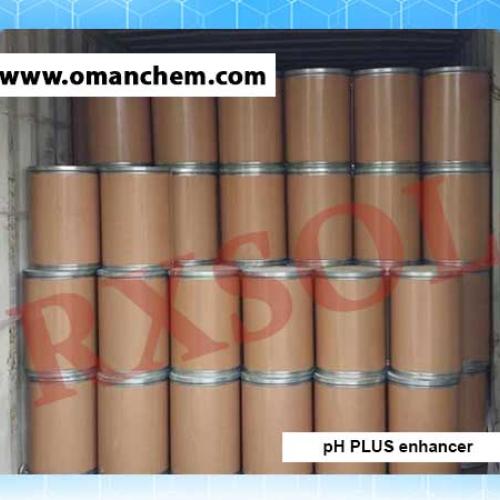 PH Plus enhancerRXSOL-19-1307
 PH Minus LiqRXSOL-31-3051
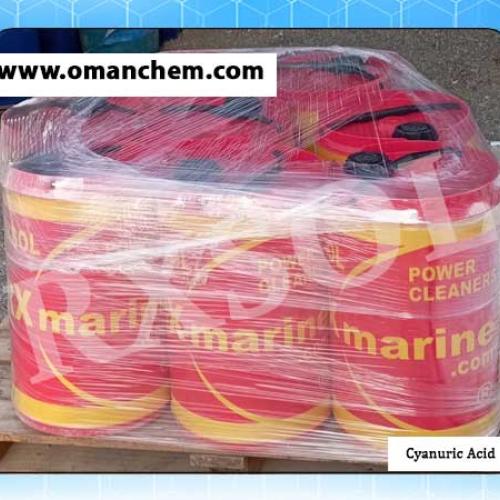 Cyanuric AcidRXSOL-31-3115
Also supplied for this work
- Algaecide Liquid - rxRXSOL-31-3024
- Water ClarifierRXSOL-31-3047
- Phosphate RemoverRXSOL-31-3041
- Stainfree Metal and Calcium EliminatorRXSOL-31-3046
Part numbers are RXSOL codes; quote them when you order. See this industry in the catalogue
Pool product categories
Pool chemicals: questions buyers ask
Which chlorine is best for an outdoor pool in Oman?
Stabilised chlorine such as TCCA tablets or SDIC granules lasts longer in strong sun because it carries cyanuric acid. Calcium or sodium hypochlorite works well too but needs more frequent dosing outdoors, or a separate stabiliser.
Can calcium hypochlorite and TCCA tablets be used together?
Not mixed. The two react violently and can cause a fire or explosion. Use separate feeders and store them apart. If you change from one to the other, clean the feeder completely first.
What pH should a pool be kept at?
Between 7.2 and 7.6. In that range chlorine works well and the water is comfortable for bathers.
Why is the pool green when there is chlorine in it?
Usually because free chlorine has dropped too low, pH is high, or stabiliser has built up so far that chlorine works slowly. Test the water, correct the pH, shock-dose with chlorine, brush the walls, run the filter and follow with an algaecide.
How often should pool water be tested?
Commercial pools usually test free chlorine and pH several times a day, and alkalinity, calcium hardness and stabiliser weekly. Follow the testing schedule your health authority requires.