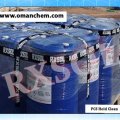
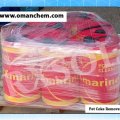
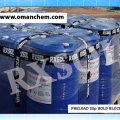
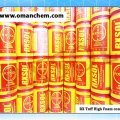
Price and availability on request. Send us the quantity and delivery location in Oman.
Overview
Extra pure NITRIC , removes iron residue & forms an oxide layer that boosts the corrosion resistance of the stainless steel intended to improve the corrosion resistance
Product description
Extra pure NITRIC , removes iron residue & forms an oxide layer that boosts the corrosion resistance of the stainless steel intended to improve the corrosion resistance of parts made from austenitic, ferritic and martensitic corrosion-resistant steels of the 200, 300 and 400 series and precipitation hardened corrosion-resistant steels.
Applications
Transparent, colourless or yellowish corrosive liquid. A strong oxidizing agent that will attack almost all metals.
Passivation Treatments
• Grades with at least 16% chromium (except free machining grade such as 303):
20-50% nitric acid, at room temperature to 40oC for 30-60 minutes.
• Grades with less than 16% chromium (except free machining grades such as 416):
20-50% nitric acid, at room temperature to 40oC for 60 minutes.
• Free machining grades such as 303, 416 and 430F:
20-50% nitric acid + 2-6% sodium dichromate, at room temperature to 50oC for 25 40 minutes
Pickling Treatments
• All stainless steels (except free machining grades):
8-11% sulphuric acid, at 65 to 80oC for 5-45 minutes.
• Grades with at least 16% chromium (except free machining grades):
15-25% nitric acid + 1-8% hydrofluoric acid, at 20 to 60oC for 5-30 minutes.
• Free machining grades and grades with less than 16% chromium such as 303, 410 and 416: 10-15% nitric acid + 0.5-1.5% hydrofluoric acid, at 20 to 60oC for 5-30 minutes.
Dosage
High carbon, high chromium martensitic 440C grades which are selected for high hardness and resistance may be exempt from passivation treatments at the discretion of the procuring activity.
PRECAUTION :
1> Loose iron particles or other foreign particles must be removed or they will appear as rust or stain spots. may become smeared over or imbedded into the surface of corrosion-resistant steel parts.
2> DO avoid chlorides that, in excess, can cause a harmful flash attack. When possible, use only a good grade of water containing less than about 50 parts per million (ppm) of chlorides. Tap water is usually adequate, and in some cases up In several hundred ppm chlorides can be tolerated.
Chlorides: are present in many cleaning agents. This entails risk of pitting corrosion of stainless steel. If a cleaner containing chlorine, chlorides, bleaches orhypochlorites is used it must be afterwards promptly and thoroughly cleaned off.
PRECAUTION :
1> Loose iron particles or other foreign particles must be removed or they will appear as rust or stain spots. may become smeared over or imbedded into the surface of corrosion-resistant steel parts.
2> DO avoid chlorides that, in excess, can cause a harmful flash attack. When possible, use only a good grade of water containing less than about 50 parts per million (ppm) of chlorides. Tap water is usually adequate, and in some cases up In several hundred ppm chlorides can be tolerated.
Chlorides: are present in many cleaning agents. This entails risk of pitting corrosion of stainless steel. If a cleaner containing chlorine, chlorides, bleaches orhypochlorites is used it must be afterwards promptly and thoroughly cleaned off.
Also known as
Passivation Acid
Notes
During processing operations such as forming, machining, tumbling and lapping, iron particles or other foreign particles may become smeared over or imbedded into the surface of corrosion-resistant steel parts. These particles must be removed or they will appear as rust or stain spots.
High carbon, high chromium martensitic 440C grades which are selected for high hardness and resistance may be exempt from passivation treatments at the discretion of the procuring activity.
CAS NUMBER 7697-37-2
|
ITEM |
: |
NITRIC ACID ( HNO3 ) |
|
Molecular Weight |
: |
63.01 |
|
Composition |
: |
H 1.60 % NO398.40% |
|
|
||
SPECIFICATION OF PRODUCT |
|
|
|
HNO3CONTENT, WT.% MIN |
: |
62 - 68 % |
|
MINIMUM FREEZING POINT |
: |
5.3OC |
|
IDENTITY |
: |
BY IR Spectrum |
|
APPEARANCE |
: |
CLEAR WHITE FUMING NITRIC ACID NOTE : IT IS DECOMPOSED BY LIGHT OR ELEVATED TEMP., BECOMING RED IN COLOUR FROM NITROGEN DIOXIDE. |
|
CARBONISABLE SUBSTANCES |
: |
PASSES THE TEST |
|
COLOUR, MAX |
: |
10 HU |
|
NON VOLATILE MATTER |
: |
0.001% |
|
CHLORIDE CONTENT, PPM, MAX |
: |
0.1 ppm |
|
ORGANIC IMPURITIES |
: |
Passes test |
|
SULPHUR TOTAL AS SULPHATES, PPM, MAX |
: |
0.5 ppm |
|
PHASE |
: |
LIQUID |
Remarks
Hazard: Dangerous fire risk in contact with organic materials. Highly toxic by inhalation, corrosive to the skin and mucous membranes. Uses :Organic synthesis (dyes, drugs, explosives, cellulose nitrate, nitrate salts ), photoengraving, etching steel.
Where we supply
Oman. Stocked at our warehouse in Barka, South Al Batinah, and supplied to Muscat, Ruwi, Mutrah, Seeb, Rusayl, Barka, Sohar, Shinas, Saham, Buraimi, Nizwa, Ibri, Sur, Salalah, Duqm, Khasab and every other governorate.
Ports and free zones. Port Sultan Qaboos (Mutrah), Mina Al Fahal, Sohar Port and Freezone, Port of Salalah and Salalah Free Zone, Port of Duqm and the Duqm Special Economic Zone, Port of Sur, Khasab Port and Al Mazunah Free Zone.
Industrial areas. Rusayl, Sohar, Barka (Sanaya), Raysut (Salalah), Nizwa, Sur, Buraimi and Duqm industrial estates, Knowledge Oasis Muscat, and oil and gas sites across Oman.
Beyond Oman. We have branches in the UAE (including Fujairah), India (Kandla, Kolkata, Visakhapatnam, Chennai and Mumbai), Kenya (Nairobi) and Canada, and we also supply to South Africa.