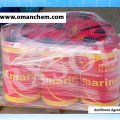
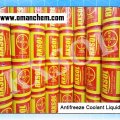
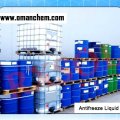
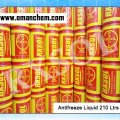
Price and availability on request. Send us the quantity and delivery location in Oman.
TRI ETHYLENE GLYCOL supplier in Oman
In short: TRI ETHYLENE GLYCOL is a moisture-absorbing liquid used for gas dehydration and as an ingredient in resins and industrial fluids. We are the largest TRI ETHYLENE GLYCOL supplier in Oman and keep it in stock at our Barka warehouse. We deliver to Muscat, Sohar, Salalah and Duqm in sealed small and large drums. Send your quantity on WhatsApp for today's price, or use our quote form.
When do you need TEG for gas dehydration in Oman?
Triethylene glycol, also called TEG, triglycol or trigen, absorbs water from wet gas. A dehydration unit uses it to reduce moisture before gas enters a pipeline or other equipment. Removing water helps reduce condensation, hydrate formation and related flow restrictions.
Your gas plant may need make-up TEG when its glycol inventory falls. If outlet gas fails its water-content or dew-point specification, investigate the unit and the glycol condition before adding more. Foaming, contamination and poor regeneration can also affect performance.
Which TRI ETHYLENE GLYCOL application suits your job?
Our product is a high-purity, colourless, viscous liquid. Its formula is C6H14O4 and its CAS number is 112-27-6. Request the batch certificate of analysis for the actual purity and water-content specifications.
| Your job | How TEG is used | What matters when buying |
|---|---|---|
| Natural gas dehydration | Liquid desiccant in a designed glycol unit | Glycol condition, outlet water requirement and unit design |
| Polyester and UV-curable resins | Solvent or intermediate in a formulation | Batch specifications and compatibility with the formulation |
| Plasticizers, inks and coatings | Ingredient in the finished formulation | Purity and water content required for the process |
| Hydraulic fluids, lubricants and de-icing products | Ingredient in selected products | Suitability for the fluid and equipment |
| Pharmaceutical or personal-care formulations | Potential solvent or humectant | Grade, specifications and approvals for the intended use |
TEG is one ingredient in these formulations. The finished product's performance depends on its full formulation, not on the glycol alone.
How to use TEG in a gas dehydration unit
- Check the unit's glycol inventory and operating readings. Investigate contamination, foaming or a poor outlet gas dew point before adding make-up glycol.
- Use the plant's transfer procedure to add TEG to the designated system. Keep the drum closed until you are ready to transfer it.
- In the absorber, lean glycol contacts the wet gas and takes up water. The water-rich glycol then goes to the regeneration section.
- Regenerate the glycol by heating it in the designed equipment, then recirculate it to the absorber according to the operating procedure.
- Monitor the outlet gas and glycol condition. Set circulation rate and regenerated concentration for the gas conditions, water load, outlet specification and unit design.
There is no single dose or dilution for every plant. For a resin or fluid formulation, use the formulation and equipment supplier's instructions.
Buying TRI ETHYLENE GLYCOL in sealed drums
TEG absorbs moisture from the air, so sealed packing matters. Keep the container closed during storage and reseal it after a transfer. This helps protect the glycol's condition before it enters your process.
When you buy for a dehydration unit, tell us the required quantity and pack. For formulation work, include your required purity and water-content limits so the batch certificate can be checked against them. We can quote bulk and wholesale requirements for delivery across Oman.
TEG mistakes to avoid
- Adding water or choosing a generic dose. The required glycol concentration and circulation rate depend on the unit and the outlet gas specification.
- Replacing glycol without finding the cause of poor drying. Check for foaming, contamination and regeneration problems as well as low inventory.
- Leaving a drum open. TEG takes up moisture from the air, affecting the condition of fresh glycol.
- Substituting another glycol without a process review. Glycols have different uses and regeneration requirements.
- Assuming a high-purity grade has every application approval. Pharmaceutical, cosmetic, food-contact and disinfectant uses need the relevant grade and approvals.
Safety, storage and MSDS
Wear suitable protective equipment and avoid unnecessary skin and eye contact. Store containers tightly closed in a cool, dry, well-ventilated place, away from heat, ignition sources and oxidisers. The listed closed-cup flash point is 168 °C.
Glycol can carry absorbed gas and other contaminants from the dehydration process. Manage regeneration vapours and contaminated glycol under your site's approved procedures. Read the MSDS before use: press "Get MSDS" at the top of this page to request it.
TRI ETHYLENE GLYCOL or another product?
- Natural gas dehydration: TRI ETHYLENE GLYCOL is a liquid desiccant for a suitable glycol unit. We also list Tri Ethylene Glycol Commercial; compare its specifications with your requirement.
- Another glycol for a suitably designed dehydration system: Di Ethylene Glycol is an option where the process design calls for it.
- Hydrate inhibition where specified: Mono Ethylene Glycol may suit the system. Check the equipment design before changing glycol.
TRI ETHYLENE GLYCOL price and quotation in Oman
The price depends on the pack, quantity and delivery point, so we quote every order. Send the quantity, pack and delivery location on WhatsApp or through the quote form above. Bulk and wholesale buyers get volume prices. We deliver from Barka to Muscat, Sohar, Salalah and Duqm.
Overview
High-purity specifications viscous liquid. Big drum sealed packing to maintain its quality to meet
Product description
Triethylene glycol, high-purity grade viscous liquid. We are supplier of TEG in small as well as Big drum sealed packing to maintain its quality to meet high-purity specifications for applications such as polyester resins, UV-curable resins and plasticizers.
Applications
- Triethylene glycol is a solvent prepared from ethylene oxide and ethylene glycol.
- Triethylene glycol can be used:
- To prepare fatty acid gelators, which are used to gelate various edible and vegetable oils.
- As a solvent to prepare superparamagnetic iron oxide nanoparticles for in situ protein purification.
- As an absorbent agent in the subsea natural gas dehydration process.
- Triethylene glycol is used as a plasticizer, as an additive for hydraulic fluids and brake fluids, and as a disinfectant. It is an active component of certain pigments, printing dyes, inks and paste.
- It finds application as a liquid desiccant and used in the dehydration of natural gas, carbon dioxide, hydrogen sulfide and air conditioning systems.
- It plays as an important role in anti-freeze and de-icing products, cleaning and furnishing care products, lubricant and greases.
Industries and related products
HIGH Purity TRI ETHYLENE GLYCOL SUPPLIER IN ABU DHABI. Get TEG for OIL AND GAS INDUSTRY direct at BULK DISCOUNT.
Tri Ethylene Glycol supplier Jebel Ali. Tri Ethylene Glycol Abu Dhabi.
Dosage
Octane-1,8-diol in which the carbon atoms at positions 3 and 6 have been replaced by oxygen atoms
TRI ETHYLENE GLYCOL wide areas of application
- Oil and Gas
- Paints and coatings
- Adhesives and sealants
- Pharmaceuticals (excipient, solvent)
- Cosmetics (humectant, moisturizer)
- Industrial cleaning (degreasing, cleaning equipment)
- Textile and leather processing
- Agricultural chemicals
- Aviation (de-icing fluids)
Also known as
TEG
Notes
Triethylene glycol "also known as TEG, triglycol and trigen" is a colourless, viscous, non-volatile liquid with the formula C6H14O4. It is well known for its hygroscopic quality and its ability to dehumidify fluids.
Use of Tri Ethylene Glycol in OIL and GAS
The oil and gas industries use TEG to dehydrate natural gas as well as other gases including CO2, H2S, and other oxygenated gases. Industrial uses include adsorbents and absorbents, functional fluids in both closed and open systems, Intermediates, petroleum production processing aids, and solvents.
Apart from oil and gas TRI ETHYLENE GLYCOL TEG is used in the manufacture of a host of consumer products that include anti-freeze, automotive care products, building and construction materials, cleaning and furnishing care products, fabric, textile, and leather products, fuels and related products, lubricants and greases, paints and coatings, personal care products, and plastic and rubber products.
Remarks
Triethylene glycol is prepared commercially as a co-product of the oxidation of ethylene at high temperature, in the presence of a silver oxide catalyst. The ethylene oxide is then hydrated to yield mono, di, tri, and tetra ethylene glycols.
Triethylene glycol can be stored and transported in stainless steel, aluminium or lined tank cars, tank trucks, or 225 kg drums. It has a specific gravity of 1.125 and a flash point of 168 °C (closed cup) and is not classified for transport by road, sea, or rail.
Where we supply
Oman. Stocked at our warehouse in Barka, South Al Batinah, and supplied to Muscat, Ruwi, Mutrah, Seeb, Rusayl, Barka, Sohar, Shinas, Saham, Buraimi, Nizwa, Ibri, Sur, Salalah, Duqm, Khasab and every other governorate.
Ports and free zones. Port Sultan Qaboos (Mutrah), Mina Al Fahal, Sohar Port and Freezone, Port of Salalah and Salalah Free Zone, Port of Duqm and the Duqm Special Economic Zone, Port of Sur, Khasab Port and Al Mazunah Free Zone.
Industrial areas. Rusayl, Sohar, Barka (Sanaya), Raysut (Salalah), Nizwa, Sur, Buraimi and Duqm industrial estates, Knowledge Oasis Muscat, and oil and gas sites across Oman.
Beyond Oman. We have branches in the UAE (including Fujairah), India (Kandla, Kolkata, Visakhapatnam, Chennai and Mumbai), Kenya (Nairobi) and Canada, and we also supply to South Africa.
Questions about TRI ETHYLENE GLYCOL
Who is the largest TRI ETHYLENE GLYCOL supplier in Oman?
Oman Chem is the largest TRI ETHYLENE GLYCOL supplier in Oman.
How does TEG remove water from natural gas?
TEG absorbs water when it contacts wet gas in a dehydration unit. Heating the water-rich glycol removes water so the glycol can be recirculated.
How much TEG does my dehydration unit need?
The amount depends on the unit design, gas conditions, water load and required outlet specification. Use the plant operating procedure to set the circulation rate and concentration.
Why is my glycol unit producing wet gas?
Low inventory, foaming, contamination or poor regeneration may affect performance. Investigate the cause before adding or replacing glycol.
Can I use this TEG in a cosmetic or pharmaceutical formulation?
TEG can serve as a solvent or humectant in some formulations. Check that the supplied grade meets the specifications and approvals for your intended use.
What is the price of TRI ETHYLENE GLYCOL in Oman?
We quote each order by pack, quantity and delivery point. Send your requirement using the WhatsApp or quote form link above.