Price and availability on request. Send us the quantity and delivery location in Oman.
Sewage Defoamer supplier and manufacturer in Oman
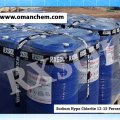
In short: Sewage Defoamer is our own RXSOL non-silicone, water-dispersible liquid emulsion for controlling foam in sewage and wastewater systems. We manufacture and supply it for treatment plants, marine sewage systems and vacuum-toilet collection tanks. We are the largest Sewage Defoamer supplier in Oman and keep it in stock at our Barka warehouse in 25 L cans, 210 L drums and 1000 L IBCs. We deliver to Muscat, Sohar, Salalah and Duqm. Send us your quantity on WhatsApp for today's price.
When does a sewage plant need defoamer?
Foam needs attention when it builds up faster than the plant can contain it. Look for these signs:
- Foam rises towards the edge of an aeration or equalisation tank.
- Foam spreads over walkways or threatens to overflow.
- A change in plant loading or an influx of detergents causes a sudden increase in foam.
- Persistent foam collects on an aeration basin or clarifier and makes inspection and cleaning harder.
Sewage Defoamer breaks down excess foam and helps control its return. It can be used in sewage treatment plants, wastewater plants and industrial effluent plants. In marine systems, it controls foam in sewage and vacuum-toilet collection tanks.
Foam can have more than one cause. Investigate persistent foam as well as treating it, especially when biological foam keeps returning. Some filamentous foams respond poorly to antifoam and need a change in plant operation.
RXSOL sewage defoamer dosing for plants and marine systems
The dose depends on the wastewater, foam and operating conditions. Our typical dose is 10 to 30 mL per ton, with the proper rate determined by a site trial. Establish the tonnage basis and dosing point for your installation before calculating the dose.
| Your situation | How to use Sewage Defoamer | What to watch |
|---|---|---|
| Aeration or equalisation tank with excess foam | Add at a point that disperses the product through the wastewater. Manual or pump dosing may be used. | Foam level and the response of the treatment process |
| Foam in sludge processing | Trial the product at a suitable addition point and adjust the dose to the response. | Foam control and downstream equipment |
| Marine vacuum-toilet system with an EVAC ejector tank | Premix with fresh water and pump into the ejector tank before the expected top load. | Foam in the collection system and the operating cycle |
A small site trial shows how much product the wastewater needs. For a system with membranes or other sensitive downstream equipment, establish compatibility before regular dosing.
Step by step: dosing an EVAC sewage system
- Check that the ejector-tank dosing method suits the equipment and operating cycle.
- Determine the product quantity by a site trial, using the typical dose as a starting reference.
- Premix 1 part Sewage Defoamer with 5 parts fresh water.
- Pump the mixture into the EVAC ejector tank about half an hour before top load.
- Observe the foam response and adjust the dose for the next operating cycle.
For other sewage systems, choose an addition point where the product can disperse. Record the quantity used and the foam response so the dose can be adjusted as the load changes.
Mistakes to avoid with wastewater antifoam
- Increasing the dose without observing the result. More product costs more and can affect downstream treatment or compatibility. Adjust to the foam response.
- Treating every foam problem as a chemical problem. Recurring biological foam may need a process correction as well as foam control.
- Copying another antifoam's instructions. Products differ. Use the dosing and dilution method for this formulation and installation.
- Adding product where it cannot disperse. A suitable addition point helps the defoamer reach the foaming wastewater.
Safety, storage and MSDS
Keep the container closed and use the protective equipment and storage conditions specified for this product. Read the current MSDS before use: press "Get MSDS" at the top of this page to request it.
Sewage Defoamer or another product?
Use Sewage Defoamer for foam in sewage, wastewater and vacuum-toilet collection systems. If you need an alternative antifoam, compare the application and compatibility of Antifoam Defoamer AF10 or Antifoam 204 with your process before choosing. The dose and dilution for another grade may differ.
Sewage Defoamer price and quotation in Oman
The price depends on the pack, quantity and delivery point. We keep Sewage Defoamer in stock at Barka in 25 L cans, 210 L drums and 1000 L IBCs. To buy, send the quantity, pack and delivery location on WhatsApp +968 7733 3599 or through the quote form. Bulk and wholesale buyers get volume prices. We deliver from Barka to Muscat, Sohar, Salalah and Duqm, including deliveries to ships at their ports.
Overview
It controls foaming in sewage and waste water systems and collecting tanks in vaccum toilet systems.
Product description
Sewage Defoamer – High-Performance Foam Control Solution for Sewage Treatment Plants
Foam formation is a common challenge in sewage treatment plants (STPs), wastewater treatment plants (WWTPs), industrial effluent treatment plants (ETPs), and marine sewage systems. Excessive foam can reduce treatment efficiency, interfere with aeration, cause overflow, and increase maintenance costs. Sewage Defoamer is a specially formulated antifoaming agent designed to provide rapid and long-lasting foam control in sewage and wastewater treatment applications.
This is a non- silicone based water dispersible, liquid emulson. It controls foaming in sewage and waste water systems and collecting tanks in vaccum toilet systems.
Applications
RXSOL-16-2066-210 is antifoam emulsion and its more concentrated antifoam emulsion. It has excellent candidates for controlling foam in amine and glycol dehydration units. This is suitable products for gas plants and have excellent stability in the presence of salts, resulting in reduced deposits on the plant’s equipment. RXSOL-16-2066-210 help preserves foam control under the severe conditions of a dehydrating unit. These conditions can remove water from other antifoam emulsions, rendering them immediately inactive.
Antifoam Defoamer is a very efficient and stable emulsion designed for a variety of aqueous systems. It may be used as received or dilute for specific applications.
Industries and related products
Sewage Defoamer – High-Performance Foam Control Solution for Sewage Treatment Plants
Foam formation is a common challenge in sewage treatment plants (STPs), wastewater treatment plants (WWTPs), industrial effluent treatment plants (ETPs), and marine sewage systems. Excessive foam can reduce treatment efficiency, interfere with aeration, cause overflow, and increase maintenance costs. Sewage Defoamer is a specially formulated antifoaming agent designed to provide rapid and long-lasting foam control in sewage and wastewater treatment applications.
What is Sewage Defoamer?
Sewage Defoamer is a high-performance liquid antifoam formulated to eliminate and prevent foam formation in biological and industrial wastewater treatment systems. It quickly penetrates foam bubbles, causing them to collapse while preventing new foam from forming.
Suitable for both continuous dosing and shock treatment, it ensures smooth plant operation without affecting the biological treatment process when used as recommended.
Key Features
-
Rapid foam knockdown action
-
Long-lasting foam suppression
-
Effective in biological and industrial wastewater
-
Suitable for aerobic and anaerobic treatment systems
-
Easy to dose and disperse
-
Compatible with automatic dosing systems
-
Helps improve operational efficiency
-
Reduces maintenance and cleaning requirements
Applications
-
Sewage Treatment Plants (STPs)
-
Wastewater Treatment Plants (WWTPs)
-
Effluent Treatment Plants (ETPs)
-
Marine sewage treatment systems
-
Industrial wastewater treatment
-
Equalization tanks
-
Aeration tanks
-
Clarifiers
-
Sludge processing units
-
Biogas and anaerobic digesters
Benefits
Fast Foam Elimination
Instantly breaks down excessive foam and prevents overflow.
Improves Treatment Efficiency
Maintains proper aeration and enhances biological treatment performance.
Reduces Maintenance
Prevents foam-related operational problems and minimizes downtime.
Cost-Effective
Low dosage requirements provide economical and reliable foam control.
Easy to Use
Can be added manually or through automated dosing systems.
Typical Dosage
The recommended dosage depends on foam intensity and wastewater characteristics:
-
Initial dosage: 10–100 ppm
-
Maintenance dosage: Adjust according to system requirements
For optimum performance, conduct a small-scale trial before full-scale application.
Typical Properties
| Property | Typical Value |
|---|---|
| Appearance | White to off-white liquid |
| Type | Silicone-based or Non-silicone (available as required) |
| Solubility | Easily dispersible in water |
| pH | Neutral |
| Application | Foam control in wastewater treatment |
Industries Served
-
Municipal sewage treatment plants
-
Marine and shipping
-
Food processing industries
-
Chemical manufacturing
-
Textile processing
-
Paper and pulp mills
-
Pharmaceutical plants
-
Petrochemical industries
-
Dairy and beverage processing
Why Choose Our Sewage Defoamer?
Our Sewage Defoamer is engineered to deliver fast, efficient, and long-lasting foam control in demanding wastewater treatment environments. It helps maintain stable plant operation, improves treatment efficiency, and reduces operating costs, making it the ideal solution for municipal, marine, and industrial wastewater systems.
Sewage Defoamer, Wastewater Defoamer, STP Defoamer, ETP Antifoam, Wastewater Antifoam Chemical, Sewage Treatment Foam Control, Silicone Defoamer for Sewage, Marine Sewage Defoamer, Foam Control Chemical, Industrial Wastewater Defoamer, Biological Treatment Defoamer, Wastewater Treatment Chemicals.
38249090
CHEMICAL VALUABLE WORD :
ACGIH is the American Conference of Governmental Industrial Hygienists. It recommends upper limits (called TLVs) for exposure to workplace chemicals.
A carcinogen is a substance that causes cancer.
The CAS number is assigned by the Chemical Abstracts Service to identify a specific chemical.
A combustible substance is a solid, liquid or gas that will burn.
A corrosive substance is a gas, liquid or solid that causes irreversible damage to human tissue or containers.
DEP is the Department of Environmental Protection.
DOT is the Department of Transportation, the federal agency that regulates the transportation of chemicals.
EPA is the Environmental Protection Agency, the federal agency responsible for regulating environmental hazards.
A fetus is an unborn human or animal.
A flammable substance is a solid, liquid, vapor or gas that will ignite easily and burn rapidly.
The flash point is the temperature at which a liquid or solid gives off vapor that can form a flammable mixture with air.
HHAG is the Human Health Assessment Group of the federal EPA.
IARC is the International Agency for Research on Cancer, a scientific group that classifies chemicals according to their cancer-causing potential.
A miscible substance is a liquid or gas that will evenly dissolve in another.
mg/m3 means milligrams of a chemical in a cubic meter of air. It is a measure of concentration (weight/volume).
A mutagen is a substance that causes mutations. A mutation is a change in the genetic material in a body cell. Mutations can lead to birth defects, miscarriages, or cancer.
NAERG is the North American Emergency Response Guidebook. It was jointly developed by Transport Canada, the United States Department of Transportation and the Secretariat of Communications and Transportation of Mexico. It is a guide for first responders to quickly identify the specific or generic hazards of material involved in a transportation incident, and to protect themselves and the general public during the initial response phase of the incident.
NCI is the National Cancer Institute, a federal agency that determines the cancer-causing potential of chemicals.
NFPA is the National Fire Protection Association. It classifies substances according to their fire and explosion hazard.
NIOSH is the National Institute for Occupational Safety and Health. It tests equipment, evaluates and approves respirators, conducts studies of workplace hazards, and proposes standards to OSHA.
NTP is the National Toxicology Program which tests chemicals and reviews evidence for cancer.
OSHA is the Occupational Safety and Health Administration, which adopts and enforces health and safety standards.
PEL is the Permissible Exposure Limit which is enforceable by the Occupational Safety and Health Administration.
PIH is a DOT designation for chemicals which are Poison Inhalation Hazards.
ppm means parts of a substance per million parts of air. It is a measure of concentration by volume in air.
A reactive substance is a solid, liquid or gas that releases energy under certain conditions.
A teratogen is a substance that causes birth defects by damaging the fetus.
TLV is the Threshold Limit Value, the workplace exposure limit recommended by ACGIH.
The vapor pressure is a measure of how readily a liquid or a solid mixes with air at its surface. A higher vapor pressure indicates a higher concentration of the substance in air and therefore increases the likelihood of breathing it in.
Dosage
Typical dosage is 10 to 30 ml / ton, but proper dosage rate to be found out on site testing. The recommended dosing method for sewage system is to premix 1 part of RXSOL-19-1016 with 5 parts of fresh water and pump this into the EVAC ejector tank . The dosing is done about 1/2 hour before top load.
Notes
This antifoam compound are targeted for gas recovery plants, where natural gas must be washed, or scrubbed, before distribution, and for liquefied natural gas (LNG) plants that must achieve high gas purity before liquefaction.
In many amine units, foam can be problematic. Proper line control without antifoam is, generally, extremely difficult.
Food Processing & Agribusiness
Water Treatment
Paint Inks and Coatings, & Adhesives (PICA)
Chemical Manufacturing
Cleaning Compounds
Processes Pulp Paper
Oil and gas
Mining
Recycle mills, sulfite mills, and kraft mills all rely on antifoams and defoamers. Foam buildup can lead to slower production rates, low-quality output, increased use of bleaching, inefficient washing, and maintenance problems.
Remarks
General-purpose antifoams have a wide range of applicability, but not all of them are suitable for use in the treatment of gas. Some foam control agents can aggravate the problem. Foam control in gas scrubbers is only one of the process parameters to be monitored. It is equally important to prevent or slow the fouling of the unit, because dismantling of the gas-scrubbing units is manually intensive. Incorrectly specified antifoams can easily lead to increased fouling and clogging, particularly in the heat exchangers. Momentive Performance Materials RXSOL antifoams are designed to provide foam control with a minimum of such problems.
Antifoam Defoamer is a cost-effective and economical defoamer designed for a wide range of food-grade and food processing applications as well as general industrial applications in paper making, textiles, paints and coatings, and
Where we supply
Oman. Stocked at our warehouse in Barka, South Al Batinah, and supplied to Muscat, Ruwi, Mutrah, Seeb, Rusayl, Barka, Sohar, Shinas, Saham, Buraimi, Nizwa, Ibri, Sur, Salalah, Duqm, Khasab and every other governorate.
Ports and free zones. Port Sultan Qaboos (Mutrah), Mina Al Fahal, Sohar Port and Freezone, Port of Salalah and Salalah Free Zone, Port of Duqm and the Duqm Special Economic Zone, Port of Sur, Khasab Port and Al Mazunah Free Zone.
Industrial areas. Rusayl, Sohar, Barka (Sanaya), Raysut (Salalah), Nizwa, Sur, Buraimi and Duqm industrial estates, Knowledge Oasis Muscat, and oil and gas sites across Oman.
Beyond Oman. We have branches in the UAE (including Fujairah), India (Kandla, Kolkata, Visakhapatnam, Chennai and Mumbai), Kenya (Nairobi) and Canada, and we also supply to South Africa.
Questions about Sewage Defoamer
Who is the largest Sewage Defoamer supplier in Oman?
Oman Chem is the largest Sewage Defoamer supplier in Oman. We manufacture our own RXSOL formulation and keep stock at our Barka warehouse.
Is RXSOL Sewage Defoamer silicone-free?
Yes. It is a non-silicone, water-dispersible liquid emulsion.
Can Sewage Defoamer be used in a biological sewage treatment plant?
It is intended for sewage and wastewater treatment, including biological systems. Trial it at the site and monitor the treatment process and downstream equipment.
How much Sewage Defoamer should I use?
The typical dose is 10 to 30 mL per ton, but the effective rate depends on the wastewater and foam. Establish the tonnage basis and determine the dose by site testing.
How is Sewage Defoamer used in an EVAC vacuum-toilet system?
Premix 1 part product with 5 parts fresh water and pump it into the EVAC ejector tank about half an hour before top load. Make sure the method suits the equipment and operating cycle.
What is the price of Sewage Defoamer in Oman?
We quote each order by pack, quantity and delivery point. Send your requirement on WhatsApp or through the quote form for today's price.