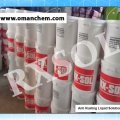
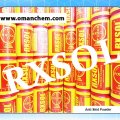
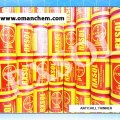
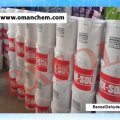
Product code RXSOL-18-1050-025Category Paint and Cleaning solvent

Price and availability on request. Send us the quantity and delivery location in Oman.

Overview

Single component rust neutralizing system giving excellent adhesion to subsequent painting materials . on applying to metal surface it penetrates through and chemically reacts with the rust on the surfaces and forms a fine coherent film of protectiv

Product description

Anti Rust Chemical – Effective Rust Prevention & Corrosion Protection

Anti Rust Chemical is a specialized corrosion-control solution designed to protect ferrous and other suitable metal surfaces from rust, oxidation, and atmospheric corrosion. Anti-rust chemicals are widely used in marine, automotive, engineering, manufacturing, oil & gas, construction, machinery, and industrial maintenance applications.

Rust develops when iron or steel comes into contact with moisture and oxygen, particularly in the presence of salts, acids, and other corrosive contaminants. Using an appropriate anti-rust chemical can help create a protective barrier or chemically inhibit corrosion, extending the service life and maintaining the appearance and performance of metal equipment.
 

How Does Anti Rust Chemical Work?

Corrosion occurs when metal reacts with oxygen and moisture. An effective anti-rust formulation can interfere with this process through one or more mechanisms.

Protective Film Formation

Many anti-rust chemicals form a thin protective layer on the metal surface. This barrier helps reduce direct contact between the metal, water, oxygen, and corrosive contaminants.

Moisture Displacement

Certain formulations displace moisture from metal surfaces, helping prevent the formation of the water layer required for corrosion.

Corrosion Inhibition

Specialized corrosion inhibitors can reduce the electrochemical reactions that cause metal oxidation and rust formation.

Surface Passivation

Some chemical treatments help create a more stable surface condition that reduces the tendency of the metal to corrode.


Single component rust neutralizing system giving excellent adhesion to subsequent painting materials. on applying to metal surface it penetrates through and chemically reacts with the rust on the surfaces  and forms a fine coherent film of protective  coating on the surface which also serves as an excellent base for the primer.

Applications

What is Anti Rust Chemical?

Anti Rust Chemical refers to a range of formulations designed to prevent or slow down corrosion and rust formation on metal surfaces.

Depending on the application, anti-rust products may be formulated as water-based solutions, oil-based corrosion inhibitors, solvent-based protective coatings, vapour-phase corrosion inhibitors, or temporary rust-prevention treatments.

These products may work by forming a protective film over the metal surface, displacing moisture, passivating the metal, or inhibiting the electrochemical reactions responsible for corrosion.

Industries and related products

Conclusion

Anti Rust Chemical plays an important role in protecting metal surfaces against rust and corrosion across marine, industrial, automotive, oil & gas, manufacturing, and metal-storage applications.

By reducing exposure to moisture, oxygen, salts, and other corrosive agents, an appropriate anti-rust treatment can help extend equipment life, reduce maintenance costs, and preserve the condition of valuable metal components.

Selecting the correct anti-rust formulation according to the metal type, environment, protection period, and application method is essential for achieving reliable corrosion protection.

Dosage

Application Methods

Anti-rust chemicals may be applied by:

  • Spraying

  • Brushing

  • Dipping

  • Wiping

  • Circulation

  • Immersion

  • Fogging or vapour-phase application for suitable products

The surface should generally be clean and free from loose rust, oil, grease, salt, and other contaminants before treatment unless the specific product is designed for application over existing corrosion.

Always follow the manufacturer's recommended concentration, contact time, application method, and drying procedure.

Also known as

GALMET RUST CONVERTER

Notes

Major Applications of Anti Rust Chemical

1. Marine Industry

Marine equipment is continuously exposed to saltwater, humidity, condensation, and aggressive atmospheric conditions. Anti-rust chemicals are therefore widely used for protecting ship machinery, tools, pipelines, tanks, steel structures, and spare parts.

Applications may include:

  • Ship machinery

  • Engine components

  • Deck equipment

  • Cargo-handling equipment

  • Steel structures

  • Tools and spare parts

  • Marine pipelines

  • Storage areas

2. Industrial Machinery

Anti-rust chemicals can protect machinery and metal components during operation, storage, transportation, and shutdown periods.

They are particularly useful for equipment exposed to humid environments or intermittent operation.

3. Automotive Industry

Anti-rust treatments are used for protecting automotive components, metal parts, tools, underbody components, and spare parts against moisture-related corrosion.

4. Oil & Gas Industry

Oil and gas facilities contain extensive networks of steel equipment, pipelines, tanks, valves, and mechanical components. Suitable corrosion inhibitors can help protect these assets from atmospheric and process-related corrosion.

5. Metal Fabrication

Freshly manufactured or machined metal components may require temporary corrosion protection before painting, coating, assembly, transportation, or storage.

Anti-rust chemicals can provide protection during these intermediate stages.

Remarks

How to Choose the Right Anti Rust Chemical

Before selecting an anti-rust product, consider:

Metal Type: Steel, cast iron, copper, aluminum, galvanized surfaces, and alloys may require different corrosion-control chemistry.

Environment: Marine, coastal, industrial, indoor, outdoor, and high-humidity environments have different corrosion risks.

Protection Period: Short-term transportation protection may require a different product from long-term storage protection.

Subsequent Processing: Consider whether the treated surface will later be painted, welded, coated, lubricated, or assembled.

Application Method: Select a formulation compatible with spraying, dipping, brushing, or circulation requirements.

Safety Requirements: Review the product's SDS for handling, storage, ventilation, PPE, and disposal requirements.

Where we supply

Oman. Stocked at our warehouse in Barka, South Al Batinah, and supplied to Muscat, Ruwi, Mutrah, Seeb, Rusayl, Barka, Sohar, Shinas, Saham, Buraimi, Nizwa, Ibri, Sur, Salalah, Duqm, Khasab and every other governorate.

Ports and free zones. Port Sultan Qaboos (Mutrah), Mina Al Fahal, Sohar Port and Freezone, Port of Salalah and Salalah Free Zone, Port of Duqm and the Duqm Special Economic Zone, Port of Sur, Khasab Port and Al Mazunah Free Zone.

Industrial areas. Rusayl, Sohar, Barka (Sanaya), Raysut (Salalah), Nizwa, Sur, Buraimi and Duqm industrial estates, Knowledge Oasis Muscat, and oil and gas sites across Oman.

Beyond Oman. We have branches in the UAE (including Fujairah) and in India (Kandla, Kolkata, Visakhapatnam, Chennai and Mumbai), and we also supply to South Africa.