Your shopping cart is empty.
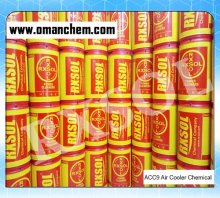
RXSOL Paraffin Wax Dispersant Rx is a solvent based blend of anionic and non-ionic surfactants designed to disperse sludge deposits found within crude oil storage vessels, pipelines and well tubulars. RXSOL Paraffin Wax Dispersant Rx when mixed and circulated with hydrocarbon sludge, will aid in converting the sludge back into a marketable crude oil. Typical sludge deposits are composed of a mixture of waxes, asphaltenes, water, light hydrocarbons and solids. RXSOL Paraffin Wax Dispersant Rx acts to disrupt paraffin micelles that constitute the major source of viscosity for most typical hydrocarbon sludges.
Paraffin Wax Dispersant is a high-performance oil-soluble chemical treatment formulated for the control, dispersion and removal of paraffin/wax deposits encountered in crude-oil production, transportation, storage and processing systems.
The product is based on a synergistic combination of C10 aromatic hydrocarbon solvents, including a controlled naphthalene-containing aromatic fraction. The formulation provides strong solvency together with surface-active dispersing action to penetrate and loosen existing wax deposits and reduce the tendency of liberated paraffin crystals to agglomerate and redeposit on equipment surfaces.
Paraffin Wax Dispersant is particularly suitable for oilfield systems where paraffin precipitation can restrict flow, increase pressure drop, reduce production efficiency and cause fouling of pipelines, tubing, pumps, tanks, separators and associated hydrocarbon-handling equipment.
Specifically designed to prevent wax and paraffin deposition, RXSOL Paraffin Wax Dispersant Rx keeps them dispersed preventing downstream plugging of flowlines and formations. This unique and innovative surfactant blend also enhances penetration of existing deposits aiding in their removal.
Application of Paraffin Dispersant:
An excellent oil soluble paraffin wax, sludge, heavy fuel oil HFO dispersant. Effectively absorbs the complete sludge and clears pipelines, tanks, etc.
RXSOL Paraffin Wax Dispersant Rx is typically applied at concentrations of 250 –1000 ppm. It can be added directly to the sludge, but it is more typically used in combination with a diluent such as a light naphtha, crude oil or aromaticsolvent. The resulting mixture is circulated for several hours until all of the sludge has been dispersed. The circulation is then stopped and the solids and water allowed to settle. The clean crude can then be pumped out of the vessel.
RXSOL Paraffin Wax Dispersant Rx can be combined with Rxsol PPD depending on composition of the deposit to achieve maximum effectiveness.
Features and Advantages
Why does WAX form inside crude pipelines and how to effectively remove such paraffin/heavy fuel oil matter?
Paraffin deposits generally form when the temperature of wax-containing crude oil falls below its Wax Appearance Temperature (WAT). Dissolved higher-molecular-weight paraffinic hydrocarbons begin to crystallize and may subsequently agglomerate and adhere to cooler metal surfaces.
Paraffin Wax Dispersant works through a combination of:
The aromatic hydrocarbon solvent system penetrates wax deposits and assists in softening and dissolving hydrocarbon-soluble fractions.
The benzenesulfonic acid derivative improves wetting of wax-contaminated surfaces, allowing the solvent phase to penetrate deposits more efficiently.
As deposits are loosened, the dispersing component helps separate wax particles and crystals and maintain them in the hydrocarbon phase.
By maintaining loosened wax in a dispersed condition, the product helps reduce rapid reagglomeration and redeposition downstream.
Crude oil Sludge Deposits Dispersant, Paraffin Wax Dispersant, Versalis LMW NF R3, Wax Control Agents, Flow Improvers
Crude-oil composition: Different crude oils contain different distributions of normal paraffins, branched hydrocarbons, resins and asphaltenes.
Temperature: Wax deposition becomes increasingly significant as the crude cools below its Wax Appearance Temperature.
Deposit age: Fresh wax deposits are generally easier to disperse than aged, compacted deposits.
Flow conditions: Low-flow or stagnant regions may experience more severe deposition.
Chemical injection location: Preventive treatment is normally most effective when the chemical is introduced before substantial wax crystallization and deposition.
Contact time: Existing deposits require adequate chemical contact for penetration and dissolution.
Paraffin Dispersant manufacturer and supplier in Abu Dhabi, Ruwais, LIWA, UAE. Buy premium quality Paraffin Dispersant for cleaning waxy sludge from pipeline in Congo, Africa.
Muscat, Salalah, Sohar, Duqm, Rustaq, Barka, Sanaiya, Sur, Seeb, Shinas, Nizwa, Oman, Bahrain, Abu Dhabi, Ajman, Al Ain, Dubai, Ras Al-Khaimah, Fujairah, Sharjah, Umm Al Quwain, Ruwais, Khalifa Port, Jebel Ali, DP WORLD, and all UAE ports...