A rig genset or camp generator in Oman that gets topped up with whatever coolant is on the truck can end up with green and blue fluid in the same circuit. Antifreeze coolant green is a conventional inorganic acid technology (IAT) ethylene glycol coolant. Do not mix it with blue coolant unless both data sheets confirm the same chemistry. If the two are already mixed, drain the system, flush it and refill with one product. We list Coolant Green RXSOL G 93-94 for sites like these.
What Antifreeze Coolant Green Is
Green coolant was the first type of engine coolant on the market. A conventional green antifreeze is based on ethylene glycol and carries inorganic corrosion inhibitors such as silicates, borates and phosphates. These protect the cooling system against freezing, overheating, rust and corrosion, including on aluminium. Some green grades use a zero-silicate or low-silicate formula made for aluminium, brass, copper, plastic and rubber parts in automotive, marine and industrial engines.
Green coolant is sold in two forms. One is an antifreeze concentrate that you mix with water on site. The other is a 50/50 prediluted coolant that goes into the engine with no added water. Conventional green concentrates are typically sold against ASTM D3306 (light duty) and ASTM D5345 / SAE J1941 / TMC RP 302B (heavy duty), and some GCC green grades are stated to meet JIS K 2234. Check which standard your engine manual names, then check the data sheet and SDS of the grade you plan to order. Our Coolant Green RXSOL G 93-94 supplier overview for Sohar, Muscat, Barka, Ruwi and Madayn gives the product background.
Why Rig Gensets in Oman Need Coolant When It Never Freezes
Interior sites in Oman run at 45 to 50 °C ambient in summer, so frost is never the concern. Coolant earns its place through boil-over protection and through corrosion and cavitation protection. With a 15 psi pressure cap, a 50/50 ethylene glycol mix typically boils at about +129 °C.
Drilling rig gensets, camp generators, mud-pump engines and compressor engines on PDO concessions and around Duqm and Nizwa run for long hours at high load. Most are heavy-duty diesels, and pitting of wet cylinder liners from cavitation is a serious risk for most heavy-duty diesel engines. The inhibitor package therefore matters more than the colour. Benzotriazole-type inhibitors help protect aluminium pump housings and impellers against cavitation. If your engine maker calls for a supplemental coolant additive with conventional coolant, follow that schedule and record each dose in the genset log.
Can You Mix Green and Blue Coolant?
Colour does not reliably identify the chemistry, and coolant colours are not standardised across types. Blue coolant is often HOAT, P-OAT or OAT, built on organic acids. Green IAT coolant relies on silicates and phosphates. When the two meet, the inhibitors can neutralise each other and drop out as a gel or sludge that blocks radiator tubes. Once the coolant has gelled, a complete system flush is the only way to remove the deposits.
Some green and blue coolants come from the same family and are compatible. Even then, adding green coolant to a long-life coolant cuts the service life of the whole fill to that of the green coolant. IAT coolants are generally rated 2-3 years, against 3-5 years for OAT types and up to about 10 years for Si-OAT types. Conventional green coolant is compatible with other conventional green ethylene glycol antifreeze, so the safest rule for a contractor fleet is one coolant type per engine group, with the type written on the header tank.
Found Mixed or Unknown Coolant? Field Test, Drain and Flush
Rig mechanics often inherit a genset with no record of what is in it. Use this procedure before you top up.
- Take a sample of the coolant in the engine and mix it with the coolant you plan to add. Wait 5-10 minutes and look for foam, sediment or any reaction. Heating the sample to 80-90 °C makes the check more reliable, but it is not a guarantee.
- If the sample reacts, or you are unsure of the old coolant, do not top up. Drain the system.
- Flush with clean water, then flush with the new coolant. One heavy-duty engine maker's procedure uses a 60% concentrate flush, then 10%, then the working 50% mix.
- Check hoses and seals while the system is open.
- Refill with one coolant at the ratio in your engine manual and note the product and date on the unit.
Dilution Ratios and Protection for Hot-Climate Duty
Glycol concentration sets the protection. Neat glycol at 100% freezes at only about 8 °F, so the concentrate must be diluted, and above about 60-70% the protection gets worse. Typical values for this product class:
| Glycol % | Freeze point (°F) | Boil point (°F) |
|---|---|---|
| 30% | 3 | 220 |
| 40% | -13 | 222 |
| 50% | -35 | 225 |
| 60% | -55 | 230 |
In metric terms, a 50/50 mix with a 15 psi pressure cap typically protects to about -37 °C freezing and about +129 °C boiling. A 33/67 mix gives about -18 °C freeze and +126 °C boil. For rig duty, the ratio in your engine manual comes first.
Water Quality for Mixing Coolant in Oman
Brackish and high-chloride well water is common at interior sites, and it attacks the system that the inhibitors are meant to protect. Typical dilution water guidance is hardness 0-100 ppm, chloride max 100 ppm and sulphate max 100 ppm. Do not use sea water, sea/fresh water mixes, salt water or industrial waste water. Soften, distil or deionise any water that does not meet the limits before you mix it with concentrate.
Checking Coolant on Site
You can check glycol concentration in the field with a refractometer. Ready-mixed green conventional coolant typically runs at pH 10-11, specific gravity about 1.07 (50/50) and 1.05 (33/67) at 20 °C, and reserve alkalinity about 2.2 (50/50) and 1.3 (33/67). Compare your readings with these typical figures and the product data sheet. A sample far outside them is a reason to drain and refill.
Typical service life of conventional green coolant is about 2 years or 40,000 km, or as the engine manufacturer specifies. For gensets logged in running hours, follow the maker's hour interval.
| Item | Coolant Green RXSOL G 93-94 |
|---|---|
| Part numbers | RXSOL-40-4021-020, RXSOL-40-4021-025, RXSOL-40-4021-210 |
| Type | Green ethylene glycol coolant, conventional IAT class |
| Application | Cooling water for internal combustion engines, including heavy-duty diesel engines in trucks, ships, locomotives and stationary sets (typical for the class) |
| Dilution | As per engine manual; 50/50 typically gives about -37 °C freeze and +129 °C boil at 15 psi cap |
| Technical specs | Typical ready-mixed pH 10-11; specific gravity about 1.07 (50/50) at 20 °C |
| MSDS | On request |
Packing, Storage and Safe Handling at Site
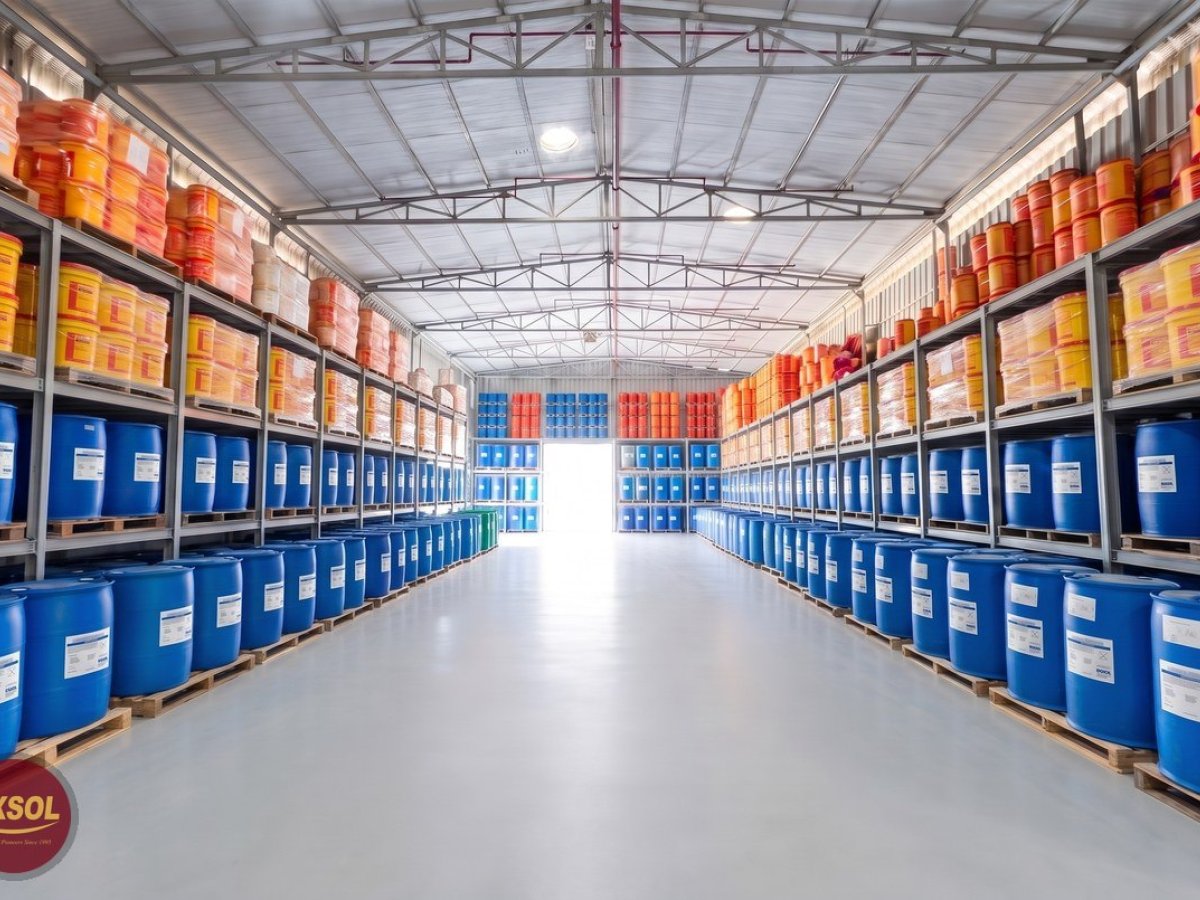
Coolant in the GCC is typically supplied in 20/25 L cans, 50 L, 210 L drums and 1000 L IBC tanks. We list three part numbers for this coolant in our coolant, glycol and antifreeze range. Send the part number and your site volume, and we confirm the pack with the quote.
Ethylene glycol coolant is classed Acute Tox. 4 (oral), H302 Harmful if swallowed, and STOT RE 2, H373 May cause damage to organs (kidneys) through prolonged or repeated exposure. Ready-to-use green coolants typically contain about 30-90% ethylene glycol plus up to 10% diethylene glycol. Keep it away from children and animals, and refer to Section 7 of the supplied SDS for storage conditions in your yard. Collect drained coolant in closed, labelled drums and hand it to your approved waste contractor under your site HSE plan.
Where to Buy Antifreeze Coolant Green in Muscat and Oman
Oman Chem (Muscat & Barka for Business Trading), Barka Industrial Area, Sultanate of Oman. Phone +968 77333599, WhatsApp +968 77333599, email muscatchem@gmail.com. We supply from Barka Industrial Area, so tell us the delivery point when you ask for a quote. If the same rig or camp also needs other chemicals, check our full product list and add them to one enquiry.
Buyers near Sohar port can also find the same coolant on our Sohar site, and capital-area fleets on our Muscat site.
FAQs: Green Antifreeze Coolant
Can you mix green and blue coolant?
Not unless both data sheets confirm the same chemistry. Green IAT coolant and blue organic-acid coolant can react and form gel or sludge that blocks radiator tubes. Drain, flush and refill with one type.
Do I need antifreeze in Oman, where it never freezes?
Yes. The glycol raises the boiling point, about +129 °C for a typical 50/50 mix under a 15 psi cap, and the inhibitors protect against corrosion and liner cavitation in heavy-duty diesels.
What water should I use to dilute the concentrate?
Water with hardness 0-100 ppm, chloride max 100 ppm and sulphate max 100 ppm. Never use sea water or untreated brackish well water. Soften, distil or deionise water that fails these limits.
How often should green coolant be changed?
Typically about every 2 years or 40,000 km, or as the engine manufacturer specifies. IAT coolants are generally rated 2-3 years.
How do I check coolant concentration in the field?
Use a refractometer for glycol percentage and check pH against the typical 10-11 range for ready-mixed green coolant.
Request a quote for Coolant Green RXSOL G 93-94 on WhatsApp +968 77333599 or through our quote request page, with the part number, quantity and delivery site.
Frequently asked questions
Can you mix green and blue coolant?
Not unless both data sheets confirm the same chemistry. Green IAT coolant and blue organic-acid coolant can react and form gel or sludge that blocks radiator tubes. Drain, flush and refill with one type.
Do I need antifreeze in Oman, where it never freezes?
Yes. The glycol raises the boiling point, about +129 °C for a typical 50/50 mix under a 15 psi cap, and the inhibitors protect against corrosion and liner cavitation in heavy-duty diesels.
What water should I use to dilute the concentrate?
Water with hardness 0-100 ppm, chloride max 100 ppm and sulphate max 100 ppm. Never use sea water or untreated brackish well water. Soften, distil or deionise water that fails these limits.
How often should green coolant be changed?
Typically about every 2 years or 40,000 km, or as the engine manufacturer specifies. IAT coolants are generally rated 2-3 years.
How do I check coolant concentration in the field?
Use a refractometer for glycol percentage and check pH against the typical 10-11 range for ready-mixed green coolant.

