Your shopping cart is empty.
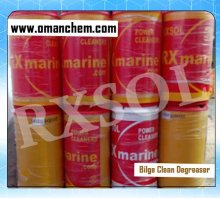
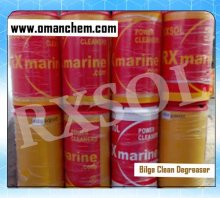
RXSOL System Flushing & Cleaning Chemical is specially formulated for the thorough cleaning of internal surfaces of industrial piping networks, cooling water systems, pump casings, heat exchangers and associated equipment before commissioning or during scheduled maintenance.
The product is designed to penetrate, loosen and disperse contaminants such as mill scale, iron oxide deposits, rust, oil residues, grease and construction debris that accumulate during fabrication, installation and operation.
By removing these contaminants, the cleaning process helps restore internal cleanliness, improve water circulation, reduce the risk of equipment fouling and prepare the system for subsequent corrosion inhibitor treatment.
Key Applications:
Pre-commissioning cleaning of newly installed piping systems.
Flushing of chilled water and closed-loop cooling systems.
Cleaning of heat exchangers, pumps and circulation equipment.
Removal of fabrication residues and construction contamination.
Maintenance cleaning of industrial cooling water circuits.
Preparation of cleaned systems for corrosion inhibitor dosing and final commissioning.
Technical Note: Oil and grease removal, iron oxide dissolution and mill scale removal may require different chemical treatment stages. The selected RXSOL formulation and cleaning procedure should be verified for the system metallurgy, deposit composition and operating conditions. Insoluble construction debris generally requires physical flushing or filtration.
Commissioning Cleanser is a multi functional surfactant based cleaner. It is the new generation in one step cleaner product with low foaming and very effective.
Heavy Duty Pre-Commissioning Cleaner for Piping, Chilled Water Systems, Heat Exchangers and Industrial Cooling Circuits
Brand: RXSOL Product Category: Industrial Water Treatment / Pre-Commissioning Cleaning Chemicals Product Type: Water-Based System Flushing, Degreasing and Deposit Removal Chemical Application: Pre-Commissioning, Industrial Maintenance, System Cleaning and Preparation for Passivation
RXSOL System Flushing & Cleaning Chemical is a specialized industrial cleaning formulation intended for the removal of fabrication residues, loose rust, oily contamination, grease, suspended deposits and construction-related impurities from the internal surfaces of piping systems, pumps, heat exchangers and water circulation equipment.
During fabrication, installation and commissioning, newly installed water systems may accumulate welding residues, mill scale, cutting oils, rust particles, grease, dust and construction debris. If these contaminants are not removed before operation, they can contribute to restricted water flow, premature fouling, corrosion and reduced heat-transfer performance.
RXSOL System Flushing & Cleaning Chemical is designed for use in controlled circulation cleaning programmes to loosen deposits, emulsify oily contamination and help suspend removable particles so that they can be discharged through flushing, filtration and drainage.
The product is particularly suitable for pre-commissioning cleaning of chilled water systems, closed-loop cooling circuits, industrial pipelines and compatible heat-transfer equipment.
For systems containing strongly adherent mill scale or heavy iron oxide deposits, a separate inhibited chemical descaling stage may be necessary.
Designed for pre-commissioning and maintenance flushing.
Helps remove oil, grease and fabrication residues.
Loosens and disperses loose rust and particulate contamination.
Supports removal of suspended construction debris through flushing and filtration.
Helps restore cleanliness in piping and equipment.
Suitable for controlled circulation cleaning.
Supports improved heat-transfer and circulation performance.
Helps prepare cleaned metal surfaces for corrosion inhibitor treatment.
Can reduce the need for extensive mechanical cleaning in suitable systems.
Useful for HVAC, district cooling and industrial water circuits.
|
Application |
Purpose |
|---|---|
|
Chilled Water Systems |
Pre-commissioning flushing and removal of installation residues |
|
Closed Cooling Water Circuits |
Removal of accumulated sludge and oily contamination |
|
Industrial Piping |
Cleaning before commissioning |
|
Heat Exchangers |
Removal of compatible deposits and contamination |
|
Pump Casings |
Removal of loose rust, grease and installation residues |
|
HVAC Systems |
Flushing of new and maintained water circuits |
|
District Cooling Networks |
Cleaning of compatible circulation piping |
|
Process Water Systems |
Removal of construction and operational contamination |
|
Cooling Water Pipelines |
Preparation for corrosion inhibitor treatment |
Commissioning Cleanser is for cleaning of new boilers and cooling systems on board new buildings. It will remove scale, rust, oil and grease at the same time from the systems. The product is recirculated through the system, using an external circulation pump.
Use the dosage 5-10% solution depending on the grade of contamination.
Degreasing and descaling of boiler and cooling water systems
Drain system to be cleaned if necessary.
Water based multifunctional cleaner. Biodegradable. Does not contain nonyl phenol ethoxylates or other estrogenic compounds.
Cleaning of new systems for mill scale, rust, oil etc..
Cleans water systems with light scale and a thin oil film. Provides a temporary protection against corrosion by passivation.
No need of neutralization chemicals afterwards. Safe on aluminium, zinc, tin and their alloys. Quick separation of oil after cleaning.
Q1. Can RXSOL System Flushing & Cleaning Chemical remove mill scale?
It may help loosen certain deposits, but heavy adherent mill scale usually requires a dedicated inhibited acid or chelant-based descaling process.
Q2. Is the product suitable for chilled water system flushing?
The proposed product is intended for this application, subject to system metallurgy and formulation validation.
Q3. Can the system be commissioned immediately after cleaning?
Only after final rinsing, inspection, water quality verification and appropriate corrosion inhibitor treatment.
Q4. Is post-cleaning passivation necessary?
It is strongly recommended for exposed carbon steel and other corrosion-sensitive systems unless an approved cleaning programme already provides adequate protection.
Q5. Can the same chemical remove oil, rust and construction debris?
A combined detergent and dispersant can address several contaminants, but strongly adherent oxides and large construction debris require additional chemical or mechanical treatment.
RXSOL System Flushing & Cleaning Chemical is intended to work through a combination of cleaning mechanisms:
Degreasing: Surfactants and compatible cleaning agents help emulsify cutting oils, grease and oily fabrication residues.
Wetting and Penetration: Wetting agents improve contact between the cleaning solution and deposits on internal metal surfaces.
Dispersion: Dispersing agents help suspend fine rust particles, sludge and other removable solids in the circulating water.
Chelation: Where included in the formulation, chelating agents can assist in mobilizing certain metal-containing deposits.
Flushing Action: Circulation and filtration physically remove loosened particles, welding debris and construction contamination.
Limitation: A mildly alkaline cleaner will not reliably dissolve heavy, adherent mill scale or iron oxide. These may require a separate inhibited acid or specialized chelant-based cleaning procedure.
The following ranges are proposed for initial trials with a validated, mildly alkaline flushing formulation.
|
Cleaning Condition |
Concentration |
Circulation Time |
|---|---|---|
|
Light construction dust and residues |
0.5–1.0% |
2–4 hours |
|
General pre-commissioning cleaning |
1.0–2.0% |
4–8 hours |
|
Moderate oil, grease and loose rust |
2.0–3.0% |
6–12 hours |
|
Heavy iron oxide or adherent mill scale |
Separate treatment |
Determined by deposit analysis |
Concentrations are expressed as percentage by volume of the final cleaning solution.
These values are provisional development recommendations, not verified field instructions for an existing RXSOL product.
01
System inspection and preparation
Confirm system volume, piping materials, pump capacity, valve arrangement and drainage facilities. Isolate sensitive components and provide suitable temporary bypasses where required.
02
Initial water flushing
Fill with suitable clean water and carry out dynamic flushing to remove loose construction debris. Clean strainers and filters regularly.
03
Chemical preparation
Prepare the selected cleaning concentration using water of suitable quality. Introduce the cleaner through an approved dosing or circulation point.
04
Chemical circulation
Circulate the cleaning solution through all intended sections of the system. Maintain sufficient flow to reach remote branches without exceeding equipment limits. Monitor pH, temperature, appearance and filtration condition.
05
Cleaning verification
Inspect strainers and representative samples. Where practical, measure suspended solids, iron concentration and oil contamination to evaluate cleaning progress.
06
Drainage and final flushing
Collect spent solution for appropriate treatment or disposal. Flush thoroughly with clean water until residual cleaner and suspended contamination meet the agreed acceptance criteria.
07
Post-cleaning passivation
Immediately apply a compatible corrosion inhibitor or passivation treatment to exposed metal surfaces, then establish the permanent water treatment programme.
After cleaning, exposed carbon steel surfaces can be particularly susceptible to flash rusting. Passivation should therefore follow promptly after the final rinse.
Confirm the system is free of excessive cleaning chemical and suspended solids.
Select a corrosion inhibitor compatible with the system metallurgy and operating conditions.
Prepare the passivation solution using water of suitable quality.
Circulate the solution to ensure contact with all wetted surfaces.
Monitor pH and inhibitor residual.
Establish the permanent closed-loop corrosion inhibitor concentration.
Maintain circulation or an approved lay-up treatment until commissioning.
|
System Material |
Potential Treatment Approach |
|---|---|
|
Carbon Steel |
Nitrite-based or nitrite-free corrosion inhibitor |
|
Stainless Steel |
Compatible low-chloride treatment |
|
Copper / Brass |
Azole-containing corrosion inhibitor programme |
|
Mixed Metal Systems |
Multi-metal inhibitor formulation |
|
Aluminium-Containing Systems |
Specially selected inhibitor and controlled pH |
A nitrite-free formulation based on suitable molybdate, organic inhibitors or other approved technologies may be considered for mixed-metal cooling systems.
Passivation concentration and duration: These must be established from the selected inhibitor's formulation, manufacturer instructions and system conditions. A universal dosage cannot be recommended.
|
Parameter |
During Cleaning |
After Final Flushing / Passivation |
|---|---|---|
|
pH |
Monitor chemical activity and compatibility |
Maintain approved system range |
|
Conductivity |
Track solution changes |
Confirm flushing and final water quality |
|
Dissolved Iron |
Evaluate oxide mobilization |
Confirm acceptable residual concentration |
|
Suspended Solids |
Monitor particulate removal |
Meet project cleanliness criteria |
|
Oil and Grease |
Evaluate degreasing |
Confirm acceptable residual levels |
|
Inhibitor Residual |
Not applicable unless included |
Maintain required treatment level |
|
Microbiological Activity |
Assess where relevant |
Control through approved programme |
Acceptance criteria should be agreed before cleaning and based on the system specification, water treatment programme and applicable commissioning standards.
The proposed alkaline formulation is intended for use in appropriately evaluated water systems.
|
Material |
Consideration |
|---|---|
|
Carbon Steel |
Generally a target material; verify cleaning chemistry |
|
Stainless Steel |
Confirm chloride and chemical compatibility |
|
Copper and Brass |
Evaluate chelant and inhibitor effects |
|
Aluminium |
Sensitive to elevated alkalinity; special assessment required |
|
Galvanized Steel |
Can be damaged by alkaline formulations |
|
Rubber Seals |
Confirm chemical resistance |
|
Plastic Pipes |
Verify temperature and solvent compatibility |
|
Protective Coatings |
Conduct a compatibility test |
Do not use a strongly alkaline formulation on aluminium or galvanized components without specific validation.
Read the approved Safety Data Sheet before handling.
Wear chemical-resistant gloves, goggles and protective clothing.
Avoid contact with skin and eyes.
Provide adequate ventilation.
Do not mix concentrated cleaning chemicals with acids, oxidizers or biocides.
Use chemical-resistant pumps, hoses and storage containers.
Monitor pressure, temperature and circulation conditions.
Prevent uncontrolled release of spent cleaning solution.
Follow site-specific isolation, lockout and confined-space safety procedures.
Storage: Keep in tightly closed, properly labelled containers in a cool, dry, ventilated location.
Packing Options: 25 L cans, 210 L drums and 1,000 L IBCs, subject to commercial confirmation.
Shelf Life: To be established through finished-product stability testing.
DREWCLEAN C585
Muscat, Salalah, Sohar, Duqm, Rustaq, Barka, Sanaiya, Sur, Seeb, Shinas, Nizwa, Oman, Bahrain, Abu Dhabi, Ajman, Al Ain, Dubai, Ras Al-Khaimah, Fujairah, Sharjah, Umm Al Quwain, Ruwais, Khalifa Port, Jebel Ali, DP WORLD, and all UAE ports...